New paper out: Nutrient uptake rates of native vs invasive seagrasses
Update: this paper is now published at 10.1016/j.aquabot.2026.104053
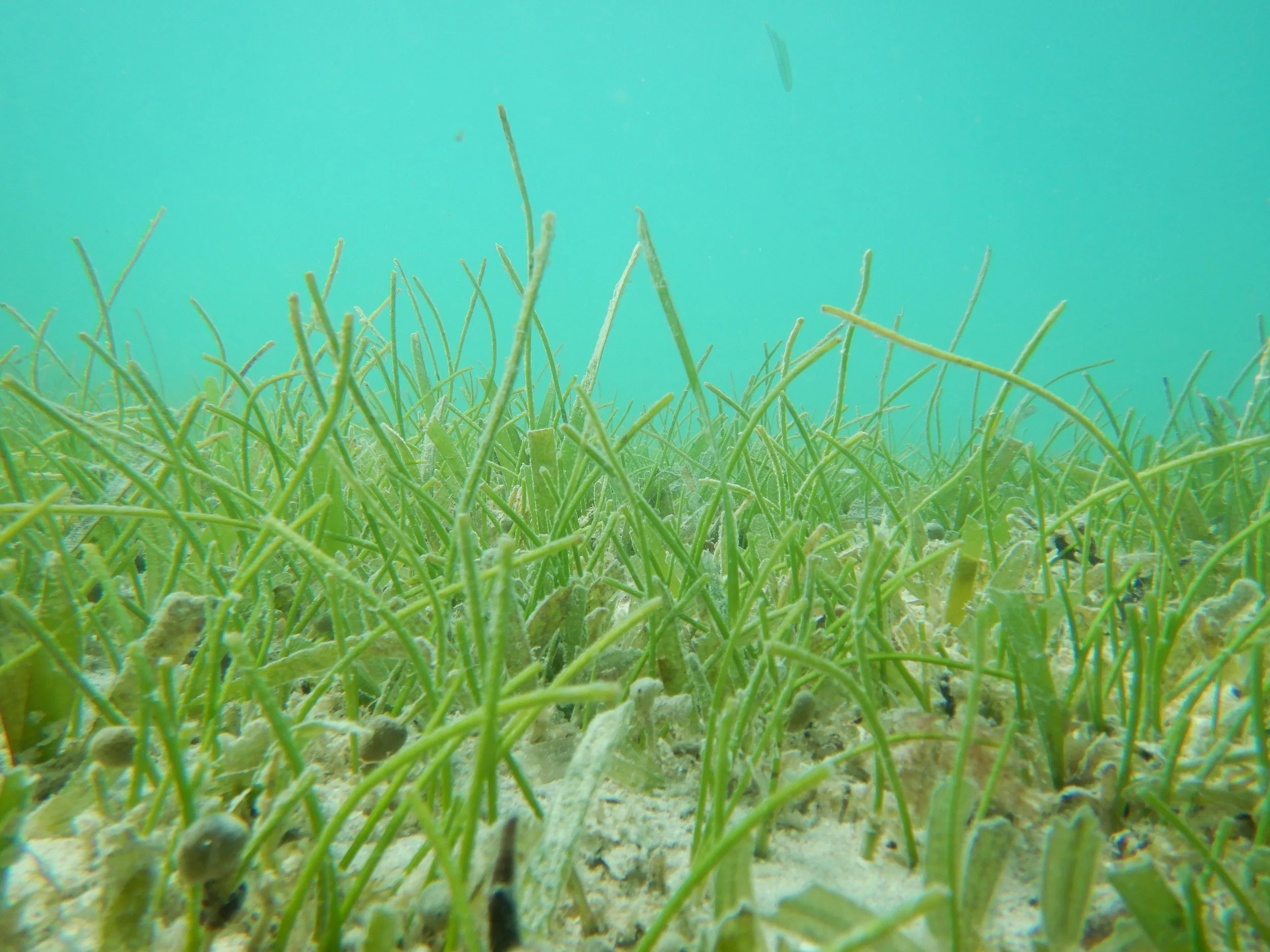
Photo of a mixed seagrass meadow on Bonaire including the target species of this study: invasive Halophila stipulacea, native Syringodium filiforme and Thalassia testudinum.
Invasive seagrass success
The widespread seagrass Halophila stipulacea has been rapidly invading the wider Caribbean region since 2002. Often, this species is reported to replace native seagrass beds. However, mechanistic evidence of this species actively outcompeting native species is missing. Whether this species outcompetes valuable native seagrasses or is opportunistically filling in available space after native species have declined is an important outstanding question.
Novel incubation chambers with isotope tracers
For this project, we wanted to closely follow the uptake rates of ammonium (preferred source of N in these systems) in Caribbean native and invasive seagrass species. For the first time within one experiment, we followed both uptake rates by leaves and by roots for 4 species that allowed for unique comparability among plant parts and across species, using isotope tracer experiments.
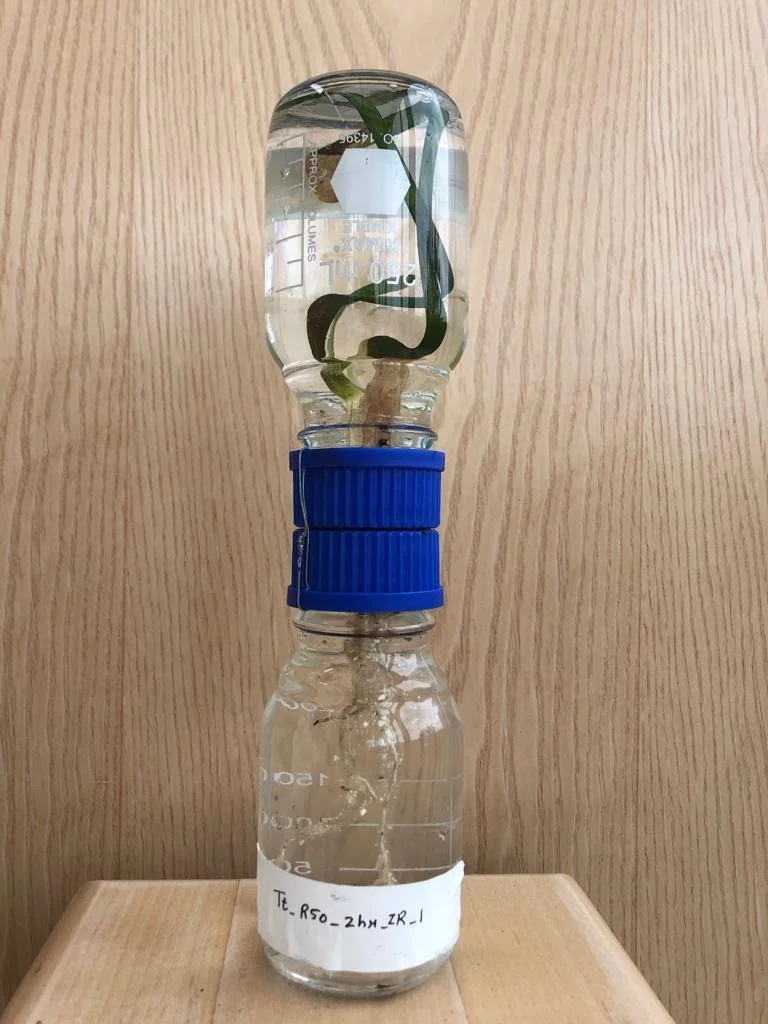
The low-cost incubation chambers developed during this project, seperating the aboveground from the belowground compartment, with native Thalassia testudinum.
Competitive outcomes depend on eutrophication status
We found that under current (low to moderate) levels of ammonium, native species were more efficient than the invasive seagrass in nutrient uptake and internal transfer. However at elevated (highly eutrophic) nutrient levels, the invasive seagrass showed high leaf uptake and root-to-leaf transfer, indicating the potential of rapid leaf proliferation and invasive seagrass dominance at nutrient pulses. Our global review indicated that we still miss key uptake parameters of about 80% of seagrass species globally.
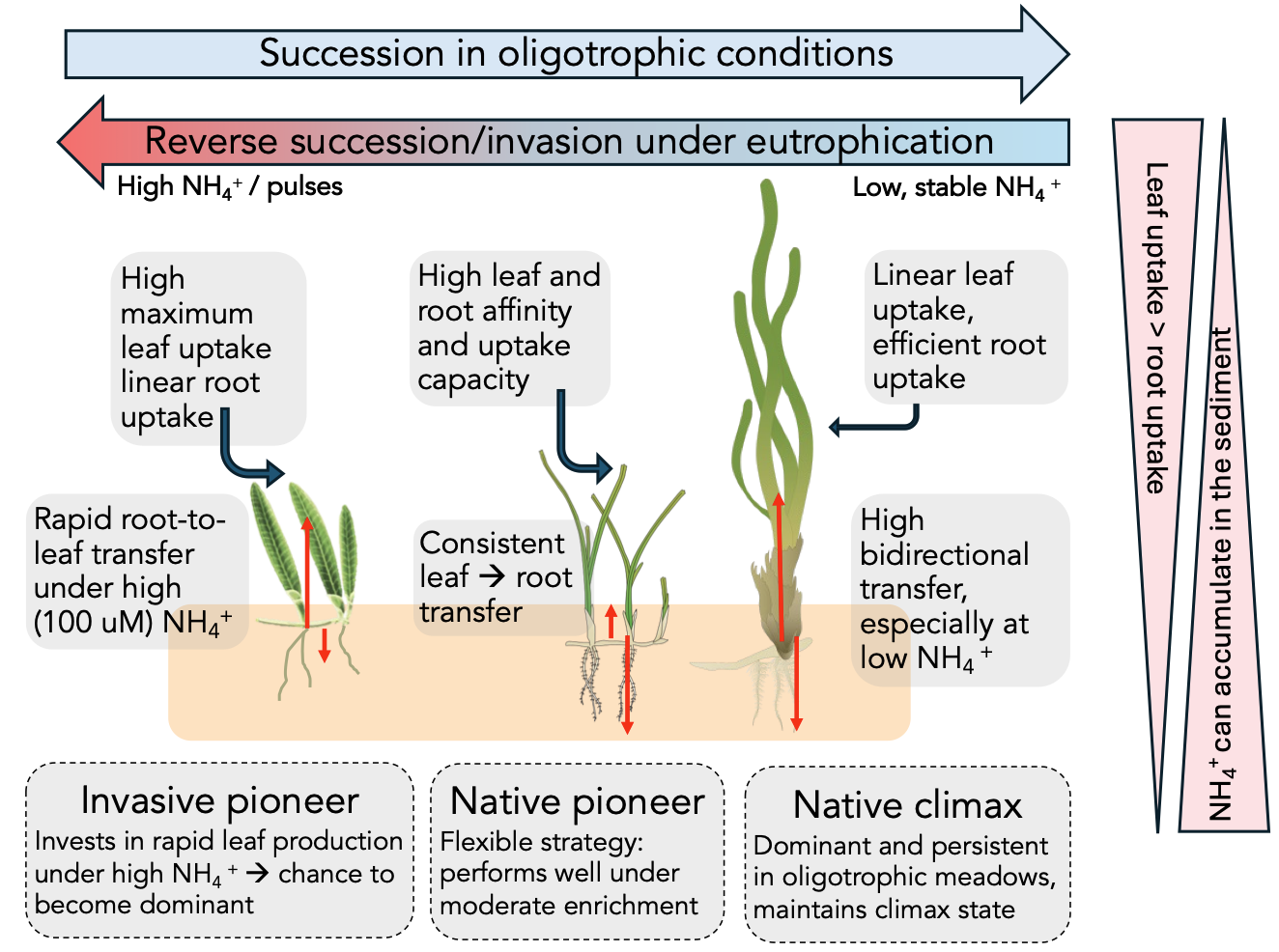
Conceptual diagram summarizing our results
Management implications and future outlook
We conclude that native Caribbean seagrasses are likely competitively favoured under low to moderate ammonium concentrations, whereas H. stipulacea may gain a context-dependent advantage under nutrient enrichment. These results stress the importance of limiting excess nutrient flows in coastal waters, while supporting the hypothesis that H. stipulacea is an opportunistic species that mostly gains advantages over native species when a system is under pressure of a certain or multiple disturbances, such as nutrient pulses, intensive grazing pressure or hurricanes. Without evidence of active outcompetition, plans to eradicate this species may be premature.
This paper is currently ondergoing peer review but can already be read via the link below, we are open for any comments you may have.